
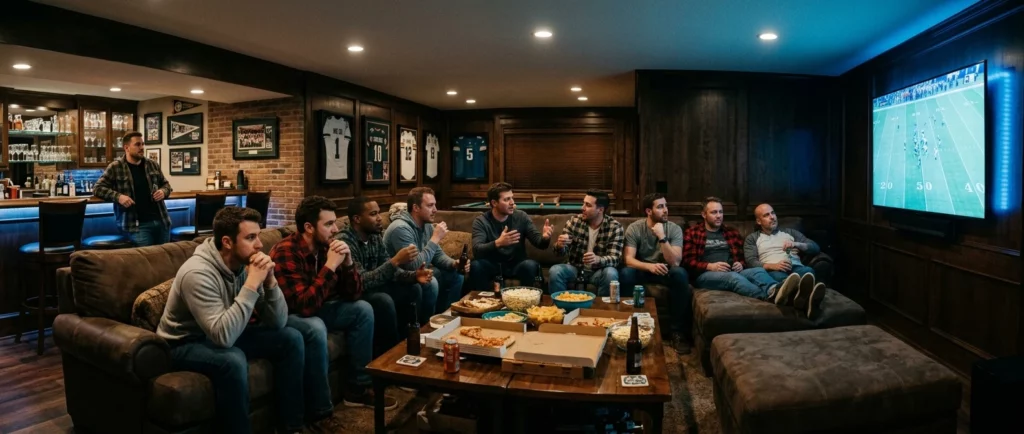
Walk into most man caves, and you’ll find the same mistake: a couch built for a living room doing a job it was never designed for. Standard sofas seat three, maybe four if everyone’s willing to get cozy. A playoff game with ten guys showing up means half your crew is standing, perched on folding chairs, or sitting on the floor like it’s a dorm room. A sectional solves that problem by design, not by accident.
Why a Sectional Beats a Standard Couch on Game Day
A sectional gives you continuous seating that wraps around a room instead of facing a single direction in a straight line. That matters more than people think when the room fills up fast, and everyone wants a clear view of the screen.
The bigger advantage is flexibility. A standard sofa is one fixed shape forever. A sectional, especially a modular one, can be reconfigured as your crowd size changes from a quiet Tuesday night rewatch to a full Sunday slate with fifteen people rotating through. You’re not buying furniture for an average night. You’re buying for your biggest night, and a sectional scales to that without eating your whole room the rest of the week.
Sectionals also handle the social dynamics of a watch party better. Standard couches put people shoulder to shoulder facing forward, which is fine for a movie but awkward for a room where guys want to talk trash, see each other’s reactions, and still watch the game. An L-shaped or U-shaped sectional lets part of the group face the screen while another section angles toward the room, so conversation happens without craning necks.
Sizing It Right: Matching Sectional Capacity to Your Room and Crew
Before you shop, measure your room and count your regulars. Not your biggest game-day crowd, your actual regular crew, with room to flex for overflow. A sectional that’s sized for fifteen people but only gets used by six most nights wastes floor space you could use for a bar cart, a cornhole setup, or a second TV angle.
A good rule of thumb: each seating section in a sectional typically holds one adult comfortably, two in a pinch. A standard six-piece sectional seats six to eight people under normal conditions. If your regular watch party runs eight to twelve guys, you’re looking at a larger modular configuration or a sectional paired with supplemental seating like bar stools or an ottoman bench.
Room dimensions matter just as much as guest count. Measure the actual usable floor space after accounting for the TV wall, any walkways you need for the kitchen or bathroom, and clearance around a bar or pool table if the room does double duty. A sectional that looks reasonably sized in a showroom can swallow a smaller game room whole once it’s delivered. Leave at least three feet of walking space around the perimeter so people aren’t climbing over each other to grab a beer.
Modular vs Fixed Sectionals: Which Layout Works for a Game Room
This is where a lot of buyers get it wrong, because they assume bigger and more complicated is automatically better. It depends entirely on your room and how often your crowd size changes.
Fixed sectionals come in one permanent shape, usually an L or a U, with the pieces attached or sold as a set that doesn’t separate. They’re sturdier, often cheaper, and simpler to arrange since there’s only one way to set them up. If your room has one obvious layout and your crew size doesn’t vary much week to week, a fixed sectional does the job without extra cost for flexibility you won’t use.
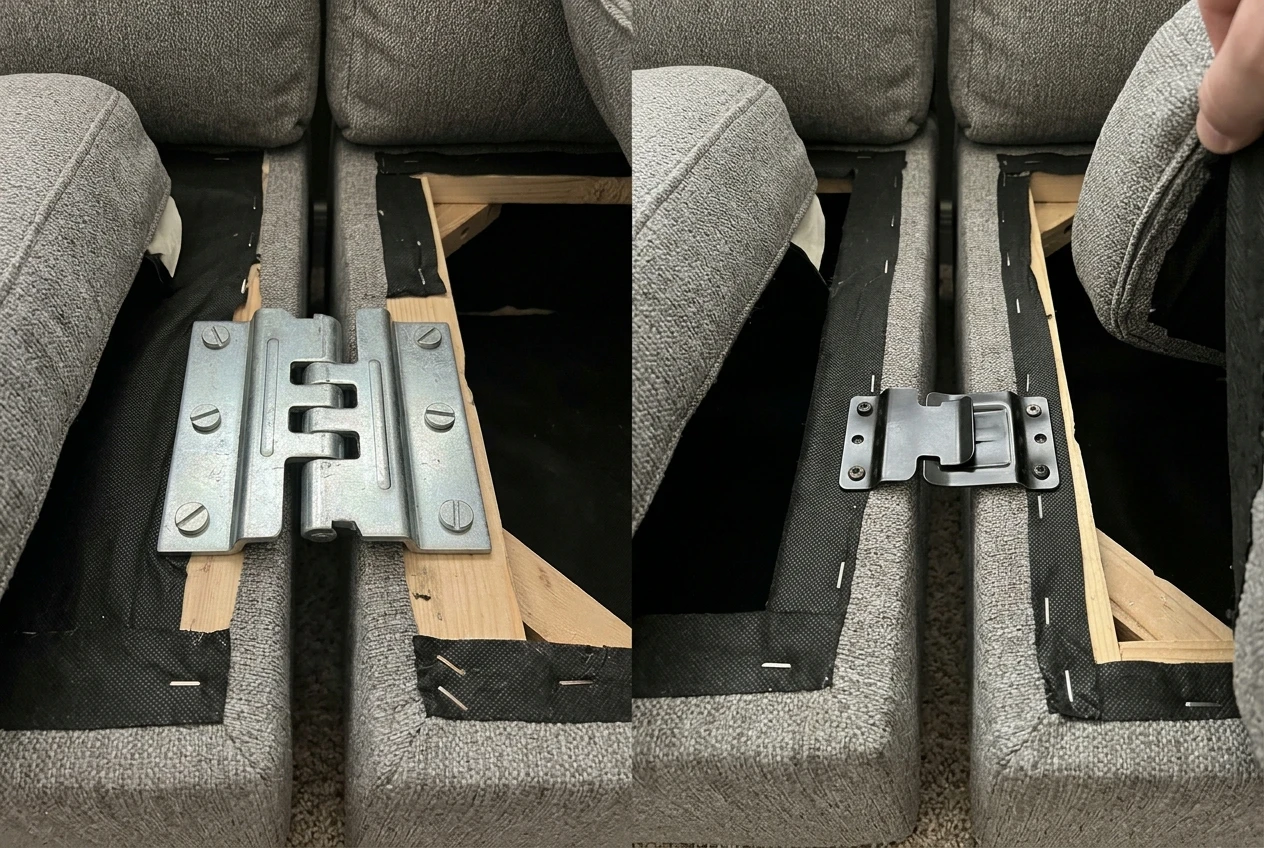
Modular sectionals are built from individual pieces, armless chairs, corner units, and ottomans- that can be rearranged or added to over time. This is the better choice if your room hosts both small weeknight hangouts and larger weekend crowds, or if you’re not entirely sure yet how you want the room laid out. You can start with a smaller configuration and add pieces later as your budget allows, which also spreads the cost out instead of committing to one large purchase up front.
The tradeoff with modular pieces is connection points. Cheaper modular sectionals use simple clips or Velcro-style connectors that can loosen over time with heavy use, leading to gaps between sections. Higher-end modular systems use metal interlocking brackets that hold tight through years of guys dropping onto the cushions.
Spill-Proof and Stain-Resistant Fabrics for Beer, Wings and Chip Dust
Game night seating takes a beating no regular living room furniture has to survive. Beer gets knocked over, wing sauce gets on fingers, and then on cushions, and chip dust works its way into seams. Fabric choice matters more here than almost anywhere else in the room.
Performance fabrics are the category to look for. These are synthetic blends, often polyester or a polyester-microfiber mix, engineered specifically to resist liquid absorption and stains. Spills bead up on the surface instead of soaking in, giving you time to wipe them up before they set. Many are also treated with stain-blocking finishes that hold up through repeated cleaning without breaking down the fabric.

Leather and faux leather are the other strong options for a high-traffic game room. Genuine leather wipes clean easily and gets more character with age, though it comes at a higher price point and can feel cold or sticky in rooms without good climate control. Faux leather, sometimes called leatherette or vegan leather, gives you similar wipeability at a lower cost, though cheaper versions can crack or peel after a few years of heavy use.
Whatever fabric you choose, check the cleaning code on the tag. A “W” code means it’s water-cleanable, safe for mild soap and water. An “S” code means solvent-only cleaning is required, which is a hassle for a room that gets this much abuse. For a man cave, stick to fabrics coded W or WS whenever possible.
Built-In Extras: Cup Holders, Coolers, Recliner Sections and Charging Ports
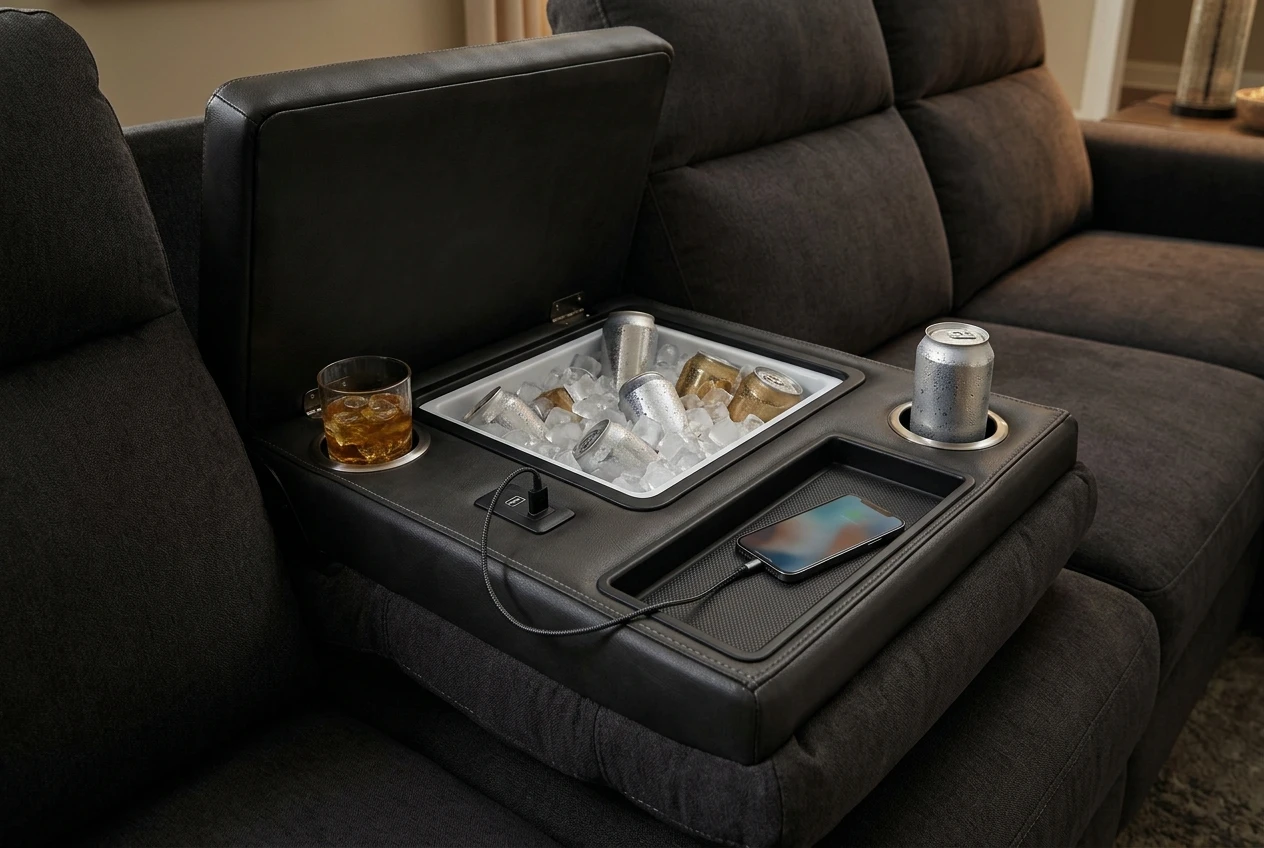
This is the category that separates a sectional bought for a living room from one actually built for a game room. Built-in features aren’t gimmicks when ten guys are packed in, and nobody wants to get up during a two-minute drill.
Common built-in extras to look for include:
- Cup holders integrated into console sections or armrests, so drinks aren’t balanced on cushions or the floor
- Pop-up or pull-out coolers built into a console, keeping beers cold and within arm’s reach without a trip to the kitchen
- Power recliner sections with USB or standard charging ports, so phones stay topped off during a long game
- Storage ottomans or hidden compartments in console sections for remotes, controllers, or snacks
- Adjustable headrests on larger sections, useful for guys who end up there for the whole game
Not every sectional needs every one of these features, and loading up on extras drives the price up fast. Prioritize based on how your room actually gets used. If snacks and drinks are a constant shuffle, built-in cup holders and a console cooler pay for themselves in convenience. If your crew tends to settle in for the long haul, a couple of power recliner sections are worth the upgrade over a fully fixed sectional.
Cushion Support and Frame Durability for Years of Heavy Use
A sectional that looks great in the showroom but sags after eight months of regular use isn’t a good investment, no matter how low the price tag looked. Durability under heavy, rotating use is a different test than durability for a couch that sees occasional use by two people.
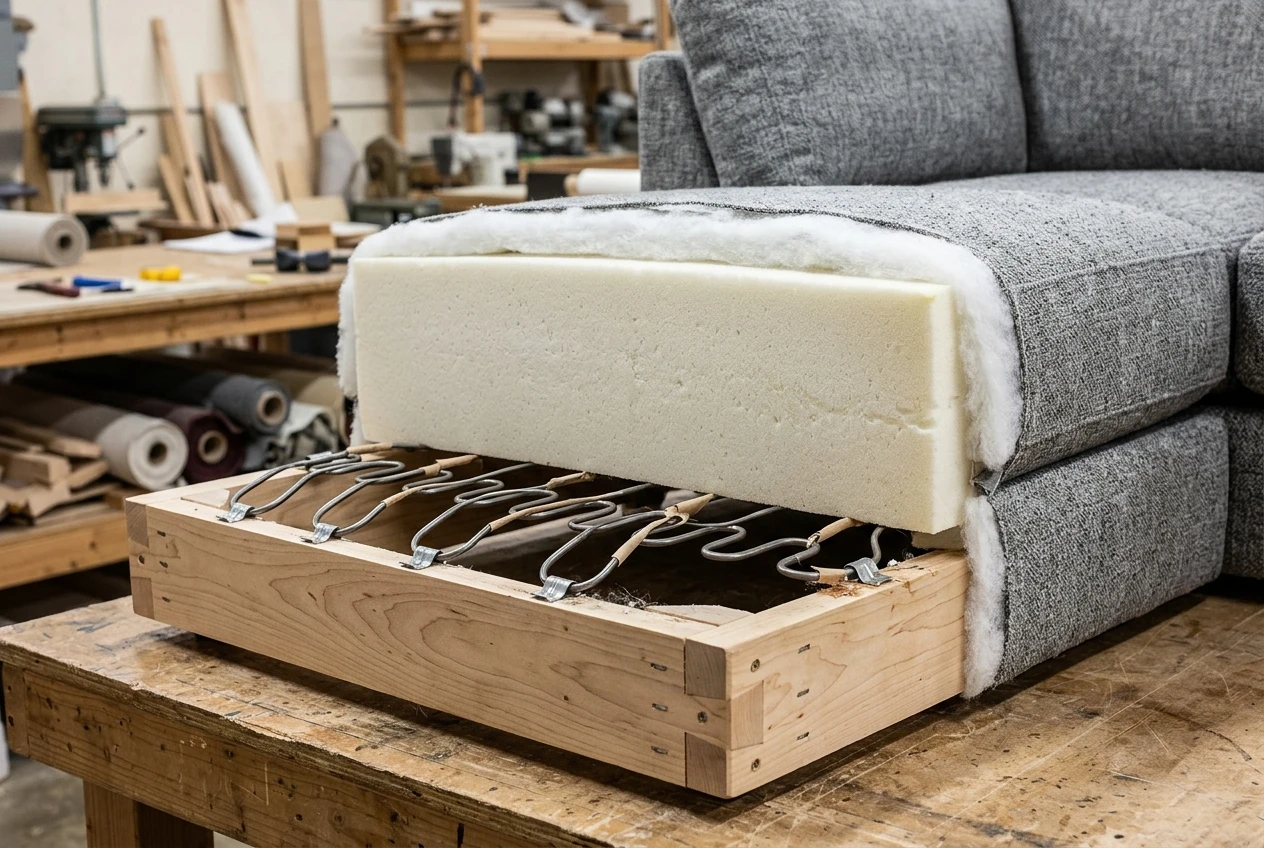
Start with the frame. Kiln-dried hardwood frames hold up far better over years of repeated sitting, standing, and the occasional guy flopping down after a bad call than particleboard or softwood frames, which can crack or warp under sustained weight. Ask about frame material before you ask about fabric color.
Cushion fill matters just as much. High-density foam, measured in pounds per cubic foot, resists flattening far longer than low-density foam cores. Look for foam density in the 1.8 to 2.5 pound range for seating that sees heavy regular use. Some higher-end sectionals combine foam cores with a wrap of down or down-alternative fiber for comfort without sacrificing support, though pure down-filled cushions alone tend to flatten faster under repeated heavy use and need regular fluffing.
Check the suspension system underneath the cushions too. Sinuous spring suspension, sometimes called S-spring or serpentine spring, offers solid support and bounce-back for most game room sectionals. Eight-way hand-tied springs are the higher-end standard, offering better long-term support, though they come at a noticeably higher price.
Arranging the Sectional for Sightlines to the Big Screen
Even the best sectional fails if it’s positioned so half the room is watching the game at an angle or craning around a corner section. Sightlines should drive the layout decision as much as the floor plan does.
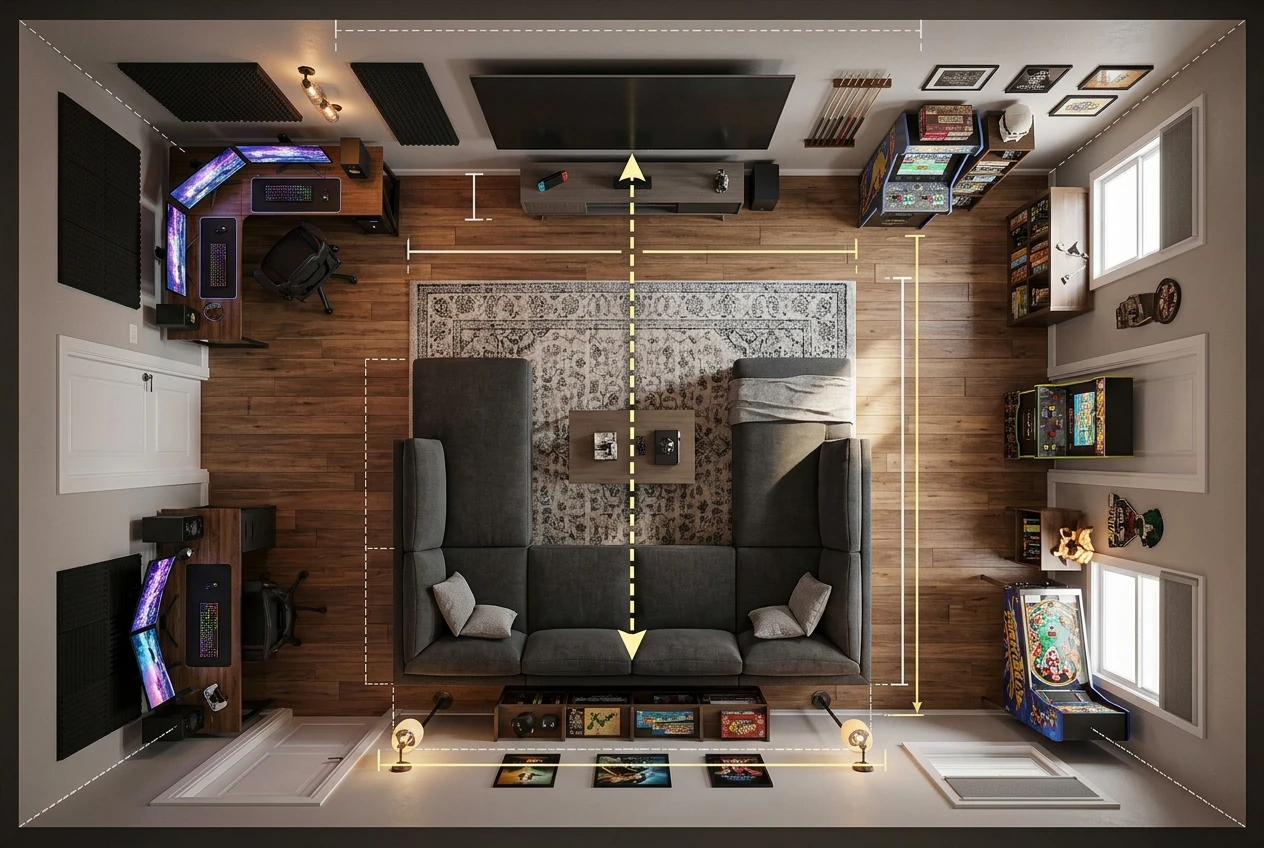
For an L-shaped sectional, position the long run of seating facing the TV directly, with the shorter return section angled so it still has a clear line to the screen rather than facing a side wall. U-shaped sectionals work well in larger rooms where the screen can be centered along one wall, giving both side sections a reasonably direct view.
Distance matters too. A general guideline is that the farthest seat from the screen shouldn’t be more than about 1.5 times the screen’s diagonal size away, which keeps the picture readable even from the back corner of a large sectional. If your room has a particularly large screen, the full gameplan for the space, including seating distance and screen size, is worth working out before you finalize the sectional’s footprint.
If your room also doubles as a spot with a bar, pool table, or display cases, keep the sectional’s footprint clear of walking paths between those areas. Nobody wants to navigate around a corner section every time they grab a drink during a commercial break.
What You Get at Each Price Tier
Sectional pricing varies widely, and what you get at each level follows a fairly predictable pattern.
Entry-level sectionals typically run in the lower price range and use basic polyester fabric, particleboard or softwood frames, and standard foam cushions without much density. These can work fine for lighter use or a secondary seating area, but they’re not built for ten guys rotating through every weekend for years.
Mid-range sectionals add better frame construction, often engineered hardwood, along with higher-density foam and performance fabric options. This is typically where you start seeing built-in cup holders and basic console storage. For most game rooms with a regular but moderate crowd, this tier offers the best balance of durability and cost.
High-end sectionals bring kiln-dried hardwood frames, eight-way hand-tied or premium spring suspension, top-grain leather or advanced performance fabrics, and the full range of built-in extras including power recliner sections, console coolers, and charging ports throughout. This tier makes sense for a dedicated, frequently used game room where the sectional is the centerpiece of the space and needs to hold up to years of heavy, regular use without a drop in comfort or support.
Once the seating is locked in, it’s worth stepping back and looking at the rest of the room as a whole. Check out the Ultimate Mancave Checklist for everything else your room needs once the seating is sorted.